

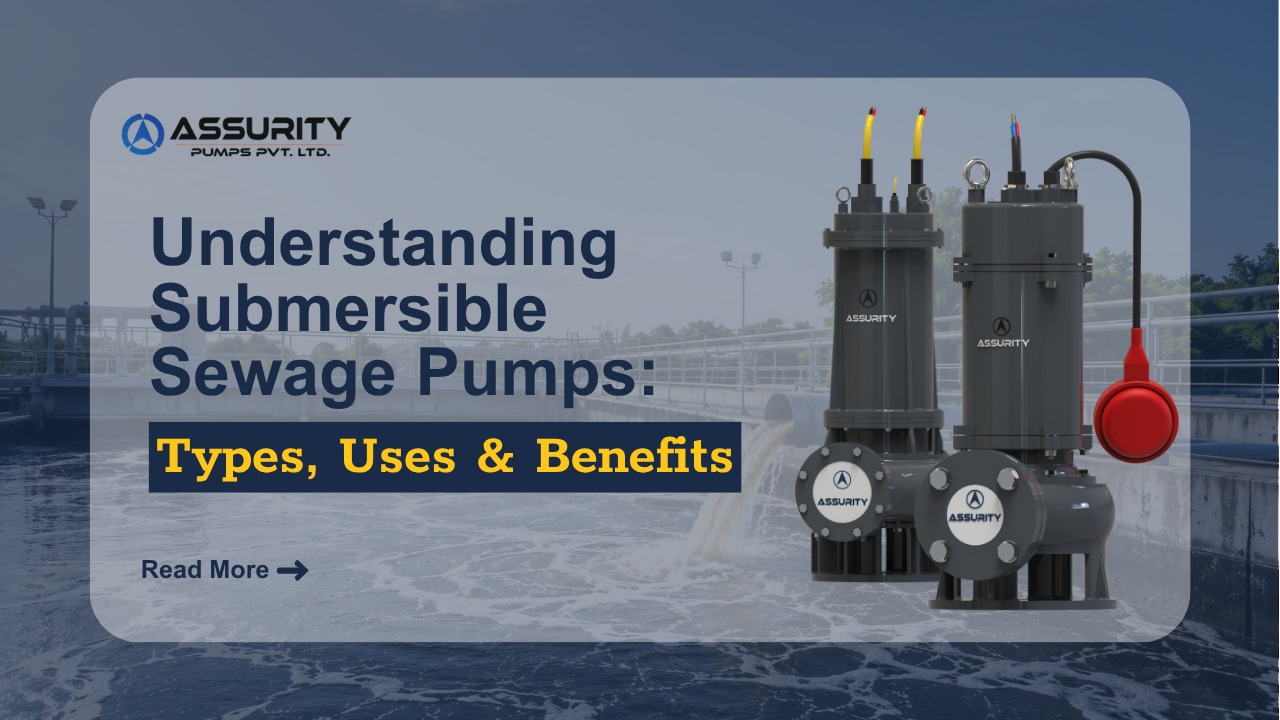
Introduction to Submersible Sewage Pumps
Wastewater management is one of the most important aspects of modern residential, commercial, industrial, and municipal infrastructure. Whether it is a residential building, apartment complex, factory, hospital, hotel, or municipal sewage treatment plant, the efficient movement of wastewater is essential for maintaining hygiene, environmental safety, and operational efficiency.
This is where submersible sewage pumps play a critical role. Designed to operate while completely submerged in wastewater, these pumps provide a reliable and efficient solution for transporting sewage, sludge, and wastewater from one location to another.
Many property owners and facility managers often struggle with sewage disposal issues, clogged drainage systems, and wastewater management challenges. A properly selected submersible sewage pump can solve these problems while reducing maintenance requirements and improving system performance.
At Assurity Pumps , we have extensive experience helping customers choose the right pumping solutions for residential, commercial, and industrial applications. This guide explains everything you need to know about submersible sewage pumps, including their types, uses, benefits, and how to select the best model for your requirements.
What is a Submersible Sewage Pump?
A submersible sewage pump is a specially designed pump that operates while fully immersed in sewage or wastewater. Unlike conventional pumps that remain outside the liquid, a submersible sewage pump works underwater and pushes wastewater through a discharge pipe to a designated treatment or disposal area.
The motor and pumping components are enclosed within a waterproof housing, protecting them from water damage while ensuring continuous operation.
Submersible sewage pumps are commonly used for:
- Domestic sewage transfer
- Commercial wastewater management
- Industrial effluent handling
- Municipal sewage treatment systems
- Basement drainage
- Floodwater removal
- Septic tank applications
Because the pump is submerged directly in the liquid, it does not require priming and generally operates more efficiently than many surface-mounted alternatives.
How Does a Submersible Sewage Pump Work?
A submersible sewage pump works by converting mechanical energy from its motor into hydraulic energy.
The process involves:
- Wastewater enters the pump through the inlet.
- The impeller rotates at high speed.
- Centrifugal force moves the liquid outward.
- Pressure builds within the pump housing.
- Wastewater is discharged through the outlet pipe.
Many modern submersible sewage pumps include advanced features such as:
- Automatic float switches
- Thermal overload protection
- Non-clog impeller designs
- Corrosion-resistant construction
- Energy-efficient motors
These features improve reliability and reduce downtime.
Types of Submersible Sewage Pumps
Understanding different types of submersible sewage pumps helps users choose the right solution for specific applications.
1. Standard Submersible Sewage Pumps
These pumps are designed for transporting sewage containing solid particles and wastewater.
Common applications include:
- Residential sewage systems
- Small commercial buildings
- Septic tank pumping
- Drainage systems
They are among the most widely used submersible sewage pumps because of their simplicity and cost-effectiveness.
2. Grinder Submersible Sewage Pumps
Grinder pumps contain cutting mechanisms that shred solid waste into smaller particles before pumping.
Benefits include:
- Reduced risk of clogging
- Improved flow efficiency
- Suitable for narrow pipelines
Typical applications:
- Residential communities
- Hospitals
- Hotels
- Remote sewage systems
3. Vortex Submersible Sewage Pumps
These pumps use a vortex impeller design that creates a whirlpool effect inside the pump casing.
Advantages include:
- Excellent handling of fibrous materials
- Minimal clogging
- Reliable performance in challenging wastewater conditions
Industries handling complex wastewater often prefer vortex submersible sewage pumps.
4. Heavy-Duty Industrial Sewage Pumps
Industrial environments require robust pumping solutions capable of handling:
- Chemical wastewater
- Industrial sludge
- Process water
- Heavy contaminants
These pumps are built using high-grade materials and powerful motors.
5. Cutter Sewage Pumps
Cutter pumps use sharp blades to cut large solids before discharge.
Applications include:
- Food processing facilities
- Agricultural operations
- Industrial wastewater systems
These pumps are especially useful where solid waste content is high.
Common Uses of Submersible Sewage Pumps
Residential Applications
Homeowners use submersible sewage pumps for:
- Basement drainage
- Septic tank systems
- Household sewage transfer
- Floodwater removal
These pumps help maintain sanitation and prevent water damage.
Commercial Buildings
Commercial properties require efficient wastewater management systems.
Examples include:
- Shopping malls
- Hotels
- Schools
- Hospitals
- Office complexes
A reliable submersible sewage pump ensures uninterrupted wastewater disposal.
Industrial Applications
Industrial facilities generate large volumes of wastewater.
Industries commonly using submersible sewage pumps include:
- Manufacturing plants
- Food processing facilities
- Chemical industries
- Pharmaceutical units
- Textile industries
These pumps handle wastewater efficiently while minimizing downtime.
Municipal Sewage Systems
Municipal authorities use large-capacity submersible sewage pumps in:
- Sewage treatment plants
- Lift stations
- Drainage networks
- Wastewater collection systems
These installations support public health and environmental protection.
Key Benefits of Submersible Sewage Pumps
1. High Efficiency
Because the pump operates directly inside the liquid, energy losses are minimized.This results in:
- Better performance
- Reduced power consumption
- Lower operating costs
2. Space-Saving Design
Submersible sewage pumps remain inside the sump or tank.
Benefits include:
- Compact installation
- Reduced footprint
- Improved aesthetics
This makes them ideal for facilities with limited space.
3. Reduced Noise Levels
Since the pump operates underwater, surrounding liquid naturally absorbs sound.
As a result:
- Quieter operation
- Improved workplace comfort
- Reduced noise pollution
4. Lower Maintenance Requirements
Modern submersible sewage pumps feature:
- Sealed motors
- Corrosion-resistant materials
- Non-clog impellers
These features reduce maintenance frequency and extend service life.
5. Reliable Performance
Submersible sewage pumps can operate continuously under demanding conditions.
Their robust design ensures:
- Consistent flow rates
- Long operational life
- Reduced risk of failure
6. Enhanced Safety
Because electrical components remain sealed within waterproof enclosures, submersible sewage pumps provide improved operational safety compared to some traditional pump systems.
Factors to Consider When Choosing a Submersible Sewage Pump
Selecting the right submersible sewage pump requires careful evaluation.
Flow Rate Requirements
- Determine the volume of wastewater that must be moved within a specific period.
- Higher flow requirements may need larger pump capacities.
Total Head
- Head refers to the vertical distance and pressure the pump must overcome.
- Proper head calculations ensure efficient operation.
Solids Handling Capability
- Different wastewater streams contain different solid sizes.
- Choose a submersible sewage pump capable of handling expected solids.
Material Construction
Common materials include:
- Cast iron
- Stainless steel
- Ductile iron
Material selection depends on wastewater characteristics and environmental conditions.
Energy Efficiency
High-efficiency motors reduce electricity consumption and operating expenses.
At Assurity Pumps, energy-efficient pumping solutions are recommended to help customers reduce long-term costs.
Signs That Your Sewage Pump Needs Replacement
Recognizing warning signs early can prevent costly failures.
Watch for:
- Frequent clogging
- Reduced pumping performance
- Excessive vibration
- Unusual noises
- Increased energy consumption
- Leakage around seals
- Frequent motor overheating
If these issues occur regularly, it may be time to upgrade your submersible sewage pump.
Maintenance Tips for Longer Pump Life
Proper maintenance improves reliability and extends equipment lifespan.
Recommended practices include:
Inspect Regularly
Check the pump, seals, and electrical connections periodically.
Clean the Pump
Remove debris accumulation that may affect performance.
Monitor Motor Temperature
Excessive heat can indicate operational problems.
Test Float Switches
Ensure automatic controls function correctly.
Schedule Professional Servicing
Annual inspections help identify potential issues before they become major failures.
The technical team at Assurity Pumps often advises customers to follow preventive maintenance schedules to maximize equipment performance.
Why Industries Trust Assurity Pumps
Choosing the right supplier is as important as choosing the right equipment.
Assurity Pumps has built a strong reputation by providing:
- High-quality pumping solutions
- Expert technical guidance
- Reliable customer support
- Industry-specific recommendations
- Energy-efficient products
- Long-lasting performance
Whether you need a residential sewage pump or an industrial wastewater management solution, Assurity Pumps offers products designed to deliver dependable results.
Customers across multiple industries rely on Assurity Pumps for efficient and cost-effective sewage pumping systems.
Conclusion
A submersible sewage pump is one of the most reliable and efficient solutions for wastewater management. From residential drainage systems to large-scale industrial operations, these pumps play a critical role in maintaining sanitation, preventing flooding, and ensuring smooth wastewater transportation.
Understanding the different types, uses, and benefits of submersible sewage pumps helps property owners, facility managers, and industrial operators make informed decisions. By selecting the right pump and following proper maintenance practices, users can achieve long-term performance, reduced operational costs, and greater reliability.
If you are looking for high-quality sewage pumping solutions, expert guidance, and dependable support, Assurity Pumps is ready to help.
Frequently Asked Questions
-
What is the main advantage of a submersible sewage pump?
The main advantage is that it operates while submerged, improving efficiency and eliminating the need for priming.
-
Can a submersible sewage pump handle solids?
Yes. Most submersible sewage pumps are specifically designed to handle solids and wastewater.
-
How long does a submersible sewage pump last?
With proper maintenance, a quality submersible sewage pump can last between 8 and 15 years or longer.
-
Are submersible sewage pumps energy efficient?
Yes. Because they operate directly in the liquid, they typically offer higher efficiency and lower energy consumption.
-
Which industries use submersible sewage pumps?
Manufacturing, hospitality, healthcare, municipal services, food processing, and residential sectors commonly use submersible sewage pumps.
