

Introduction
In today’s fast-growing urban and industrial environments, managing wastewater effectively is not just important—it’s essential. Whether it’s a residential building, a commercial complex, or a large-scale industrial plant, the smooth movement of sewage and wastewater plays a critical role in hygiene, safety, and environmental protection. This is where submersible sewage pumps come into the picture.
A submersible sewage pump is specifically designed to operate while fully submerged in wastewater. Unlike traditional pumps that sit above the fluid and rely on suction, these pumps push wastewater directly to the surface, making them more efficient and reliable. They are built to handle not only liquids but also solids, sludge, and debris without clogging.
With increasing demand for efficient drainage systems, industries and homeowners are now focusing on durable and high-performance pumping solutions. Brands like Assurity Pumps are known for delivering advanced, energy-efficient submersible sewage pumps that meet modern wastewater management needs.
In this comprehensive guide, we will explore everything you need to know—from how submersible sewage pumps work to their types, applications, benefits, and selection tips—so you can make an informed decision.
What is a Submersible Sewage Pump?
A submersible sewage pump is a type of pump that is installed underwater, usually in a sewage pit or tank, to move wastewater containing solids and liquids from one location to another. These pumps are designed with a sealed motor that prevents water from entering and damaging the internal components.
The key feature that makes these pumps unique is their ability to function while completely submerged. This design eliminates the need for priming and reduces energy loss, making them highly efficient.
How It Works
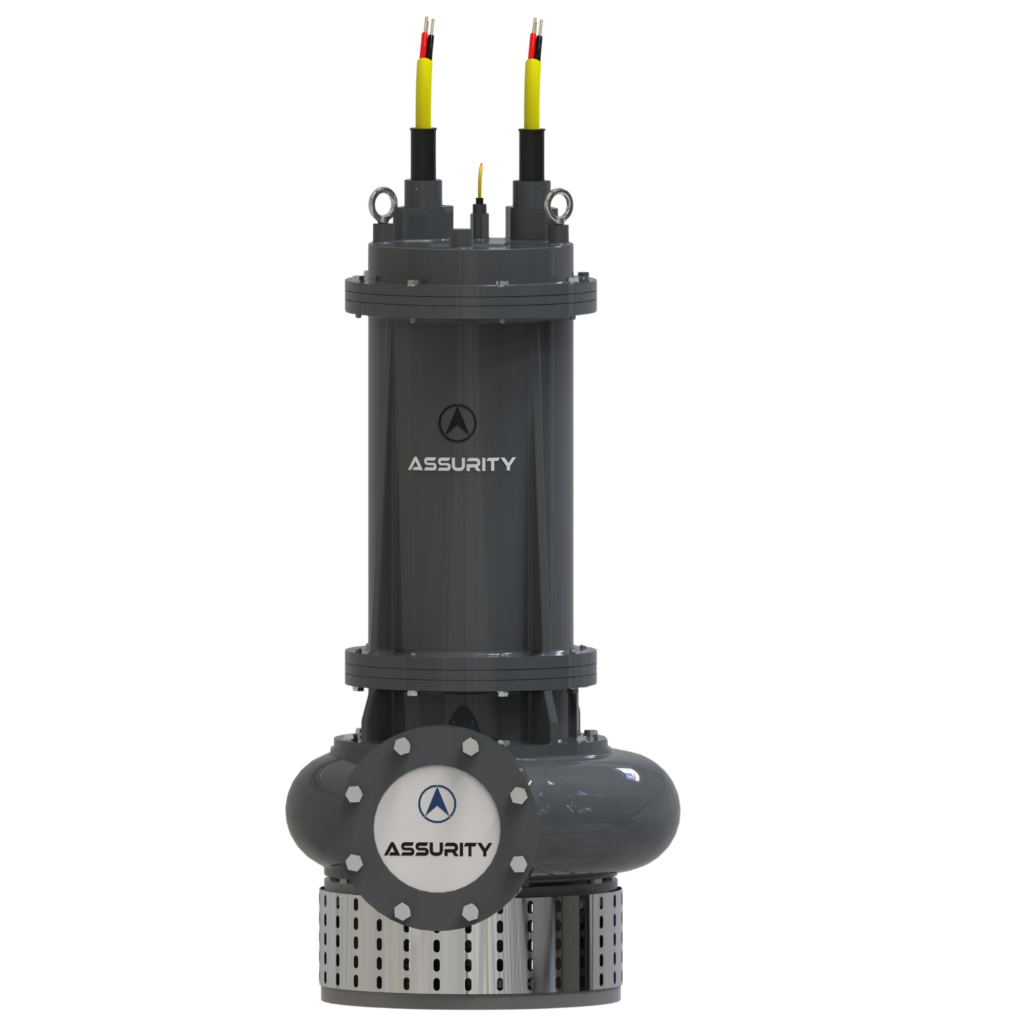
The working mechanism of a submersible sewage pump is simple yet powerful. When wastewater reaches a certain level in the pit, the float switch activates the pump automatically. The motor then drives the impeller, which creates pressure to push the wastewater through a discharge pipe.
Unlike suction-based pumps, submersible pumps push the fluid, which reduces the risk of cavitation and improves overall performance. Because they are located inside the fluid, they also remain naturally cooled, preventing overheating.
This combination of efficiency, automation, and durability makes submersible sewage pumps an ideal choice for various applications.
| Technical Parameter | Specification |
|---|---|
| Motor Body | C.I IS 210FG260 / S.S 202 / S.S 304 / S.S 316 / Alu.Alloy |
| Pump Casing Jacket | MS / S.S 202 / S.S 304 / S.S 316 / Alu.Alloy / As Per Request |
| Impeller | C.I IS 210FG260 / S.S 304 / S.S 316 / Ni – Hard / Hi – Crome |
| Shaft | S.S 410 / S.S 431 / As Per Request |
| Strainer | S.S 202 / S.S 304 / S.S 316 |
| Mech. Seal | Dual MG1Type: SIC Vs SIC / TC Vs TC / As Per Request |
| Bearing | Deep Groove Ball Bearing & Double Row Angular Contact Bearing & Cylindrical Roller Bearings |